%20(1).jpg)
The Hidden Dangers of Ignoring Your Tire Pressure
Did you know a tire can lose up to half of its air pressure before it even begins to look visibly flat? Most drivers don't think twice about their tires until a dashboard warning light flashes or they are unexpectedly stranded with a blowout on I-94. However, understanding how tire pressure impacts your safety on Illinois roads is one of the most critical aspects of preventative vehicle maintenance.
Driving on underinflated or overinflated rubber drastically alters how your vehicle handles, brakes, and responds to sudden emergency situations. When your tire pressure is off, the physical footprint of the tire that actually touches the pavement shrinks or warps. This reduces your overall traction, dramatically increases your stopping distance, and makes your vehicle highly susceptible to hydroplaning during unpredictable Midwestern rainstorms.
If you have ever found yourself frantically searching for a reliable tire shop near me after hitting a notoriously deep local pothole, you already know how vulnerable poorly inflated tires can be to structural sidewall damage. Maintaining the correct pressure is your first line of defense against both accidents and expensive rim repairs.
5 Warning Signs Your Tires Are Improperly Inflated
How do you know if your air pressure is dangerously low or excessively high? Keep a close eye out for these five critical symptoms while driving:
- Sluggish Handling and Steering: If your vehicle suddenly feels remarkably heavy, unresponsive, or sways excessively when navigating highway curves, underinflation is likely compromising your sidewall stability and control.
- Increased Stopping Distance: Notice your car taking longer to come to a complete and safe stop? Incorrect pressure reduces your grip on the asphalt, making emergency braking highly dangerous.
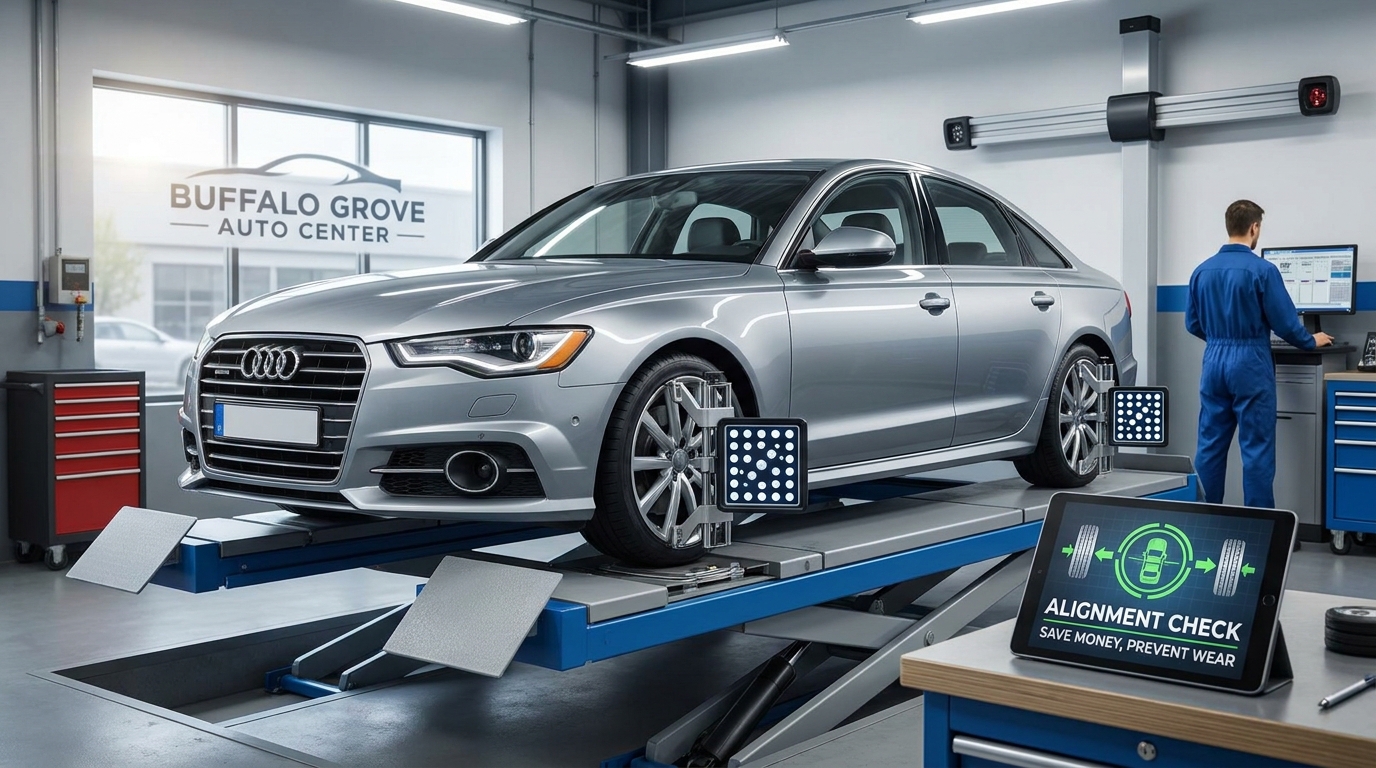
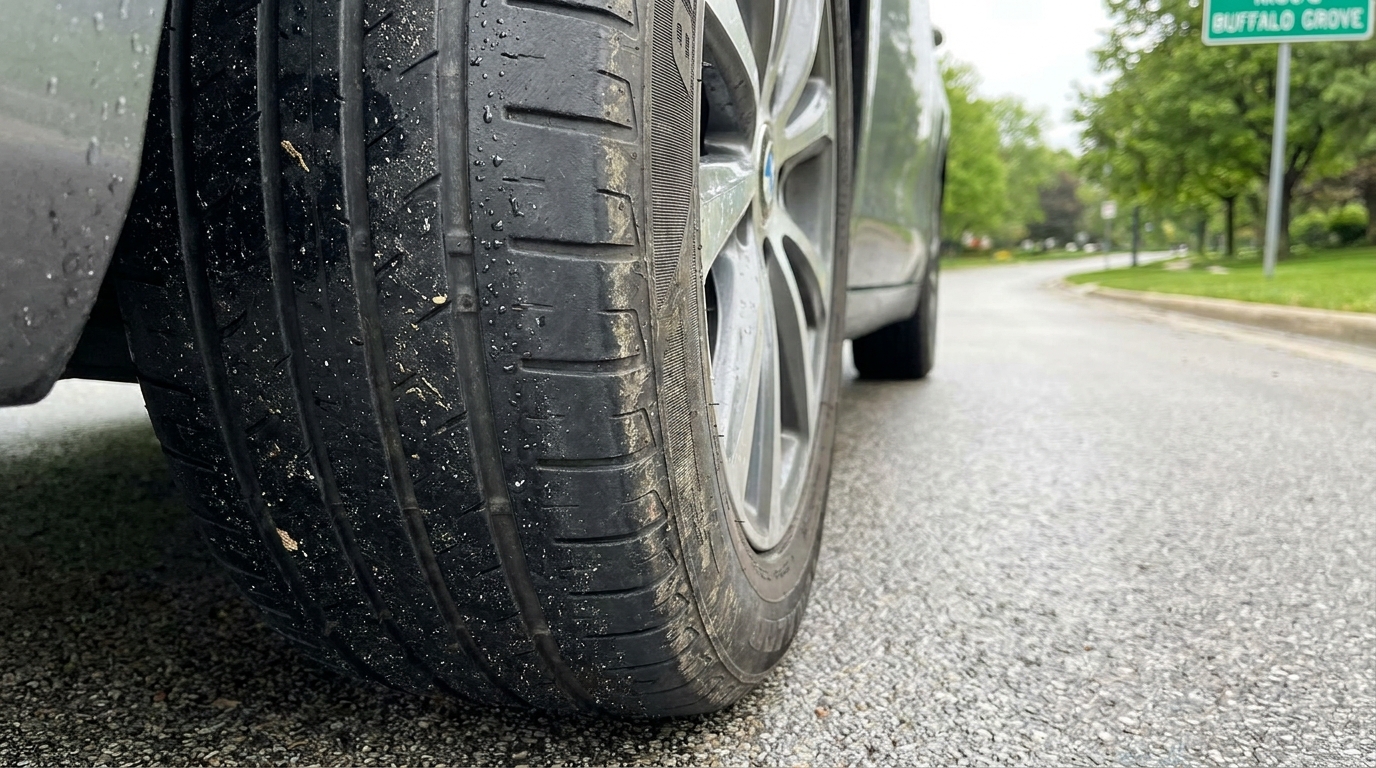
- Uneven Tread Wear: Overinflated tires wear rapidly down the exact center, while underinflated tires wear out quickly along the outer edges. If you notice these strange wear patterns, you might need more than just air; you might find yourself looking up a tire alignment near me to fix severe suspension stress.
- Poor Fuel Economy: Underinflated tires have significantly higher rolling resistance, meaning your engine has to work much harder just to keep the car moving forward, actively costing you extra money at the gas pump.
- Vibrations at Highway Speeds: While this often signals a wheel balancing issue, driving on severely underinflated tires can cause internal heat buildup and structural separation. This leads to dangerous vehicle vibrations that require immediate tire repair near me before a catastrophic blowout occurs.
How Buffalo Grove Weather Wreaks Havoc on Your PSI
Illinois weather is famously unpredictable, and those wild seasonal temperature swings have a direct and immediate impact on your safety. As a general automotive rule, your tires will naturally lose one pound per square inch (PSI) of air pressure for every 10-degree drop in the outside temperature.
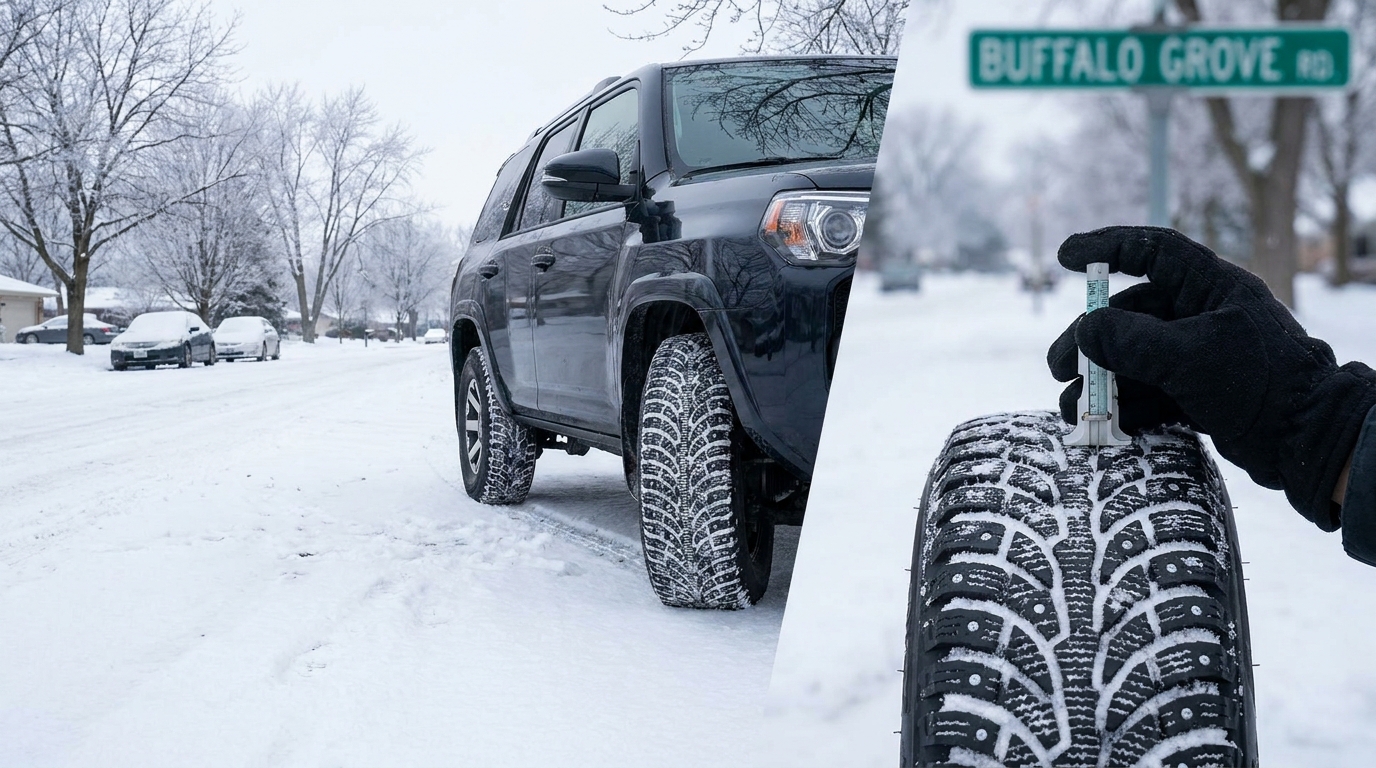
When the bitter cold hits Buffalo Grove, a tire that was perfectly inflated in September can suddenly become dangerously underinflated by December. This is especially concerning if you haven't yet switched to the best winter tires available for optimal cold-weather grip and snow traction. Conversely, scorching summer heat waves can cause tire pressure to rapidly expand, drastically increasing the risk of a high-speed blowout on hot pavement.
Whether you are currently running high-quality all-season tires or dedicated seasonal sets, proactively checking your pressure every single month is non-negotiable for local drivers wanting to navigate our seasonal extremes safely.
How to Check and Maintain Optimal Tire Health
Preventing pressure-related problems is easier than you might think. By building a simple monthly routine, you can maximize your driving safety and heavily extend the lifespan of your vehicle's tread.
- Find Your Recommended PSI: Never use the Max PSI printed directly on the tire sidewall. Instead, look for the yellow and white placard located on the driver's side door jamb, or consult your vehicle owner's manual for the manufacturer's official recommended pressure.
- Check Tires When Cold: For the absolute most accurate reading, check your tire pressure first thing in the morning before the vehicle has been driven. Driving heats up the tires and temporarily inflates the gauge reading.
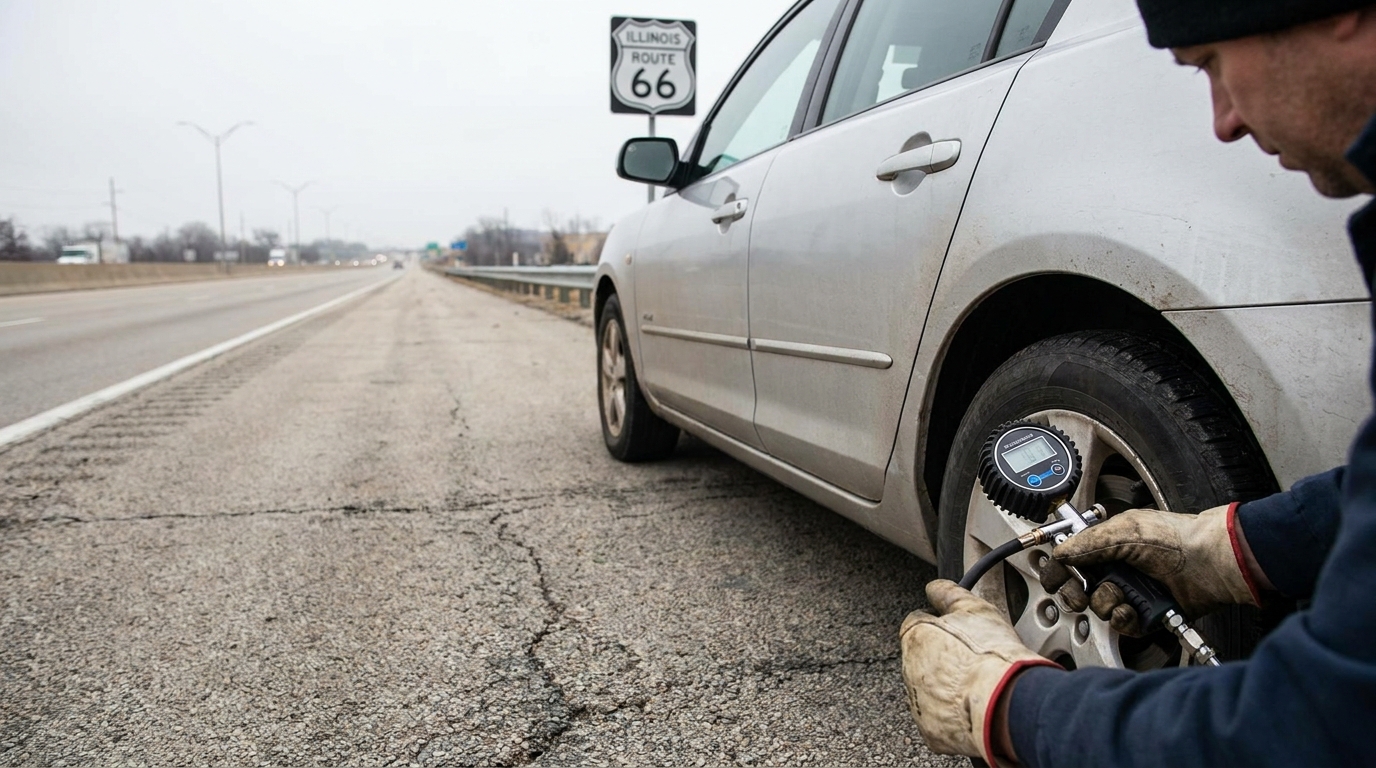
- Use a Reliable Gauge: Keep a high-quality digital or dial tire pressure gauge in your glovebox at all times. Gas station air pump gauges are notoriously inaccurate and heavily abused by the public.
- Don't Forget the Spare: If you ever experience a flat tire, you will desperately need that spare to work. Check its pressure twice a year to ensure it is completely ready for a roadside emergency.
Why Proper Inflation Saves You Money at the Shop
Beyond critical safety, proper tire maintenance is one of the easiest ways to keep cash in your wallet. Tires that are properly inflated last thousands of miles longer than those driven with incorrect pressure. When you neglect your routine PSI checks, you severely accelerate tread wear, meaning you'll be browsing for tires for sale much sooner than normally necessary.
Furthermore, maintaining correct pressure actively protects your expensive wheels and suspension components from unavoidable pothole damage. Instead of desperately hunting down the cheapest used tires near me after a sudden blowout ruins your daily commute, investing just three minutes a month to check your air pressure ensures you get the full mechanical lifespan out of your current set.
When it is finally time for a replacement, keeping up with routine maintenance ensures you aren't forced into a panicked emergency purchase. Instead, you can comfortably and safely shop around for the best tire deals from a trusted local tire shop rather than settling for whatever happens to be in stock during a crisis.
Your Trusted Buffalo Grove Automotive Experts
Don't wait until a bright dashboard warning light leaves you stressed on the side of the road. Your daily safety depends entirely on the small patch of rubber connecting your car to the pavement.
Need expert advice on your tread health? The ASE-certified technicians at Buffalo Grove Auto Center are here to help. Whether you need a simple pressure check, a complex patch repair, or a complete set of new tires, stop by today for professional service you can completely trust. Let us keep you rolling safely through Buffalo Grove and beyond.